
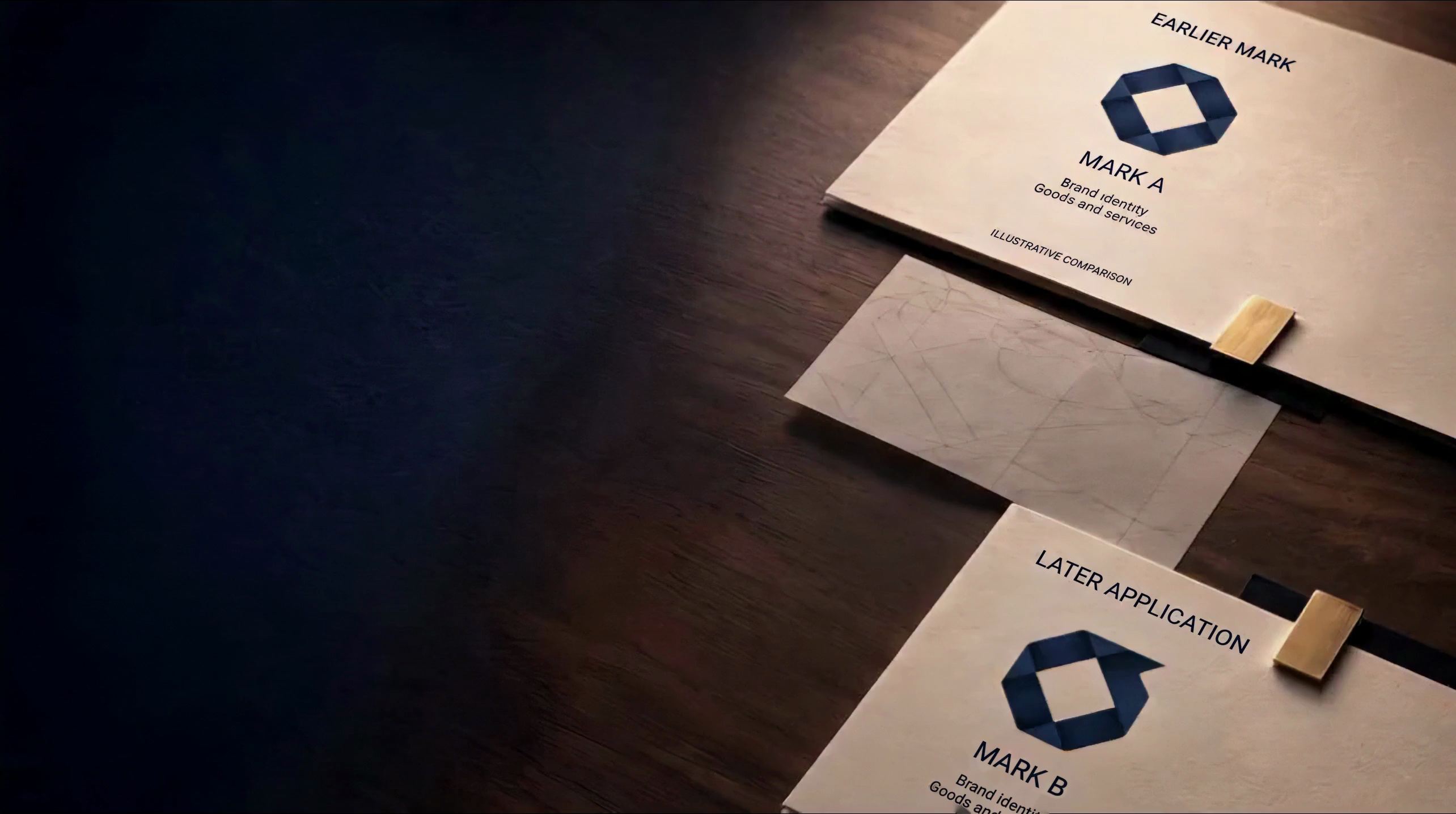
Trademark / Opposition
See the positions. Plan the response.
A clear view of the notice, evidence and work ahead.
Discuss an oppositionSee what the other party has raised.
Share the full notice and its attachments. Include any correspondence you already have, and point out any response date stated in the notice. We can then discuss the information needed and the work involved.
Trademark opposition in Malaysia.
Once the Trademark Office accepts your application, it is published in the gazette, the Intellectual Property Official Journal, for two months. During that time, anyone who believes your trademark could affect their business can file an opposition against it.
If you have received a Notice of Opposition, another party (the opponent) is trying to stop your trademark from being registered.
Receiving a Notice of Opposition does not mean your application has failed. You have the right to answer it by filing a Counter-Statement, and we are here to help.
How an opposition works
Notice of Opposition
The opponent sets out the grounds for objecting to your trademark.
Your Counter-Statement
Your answer to the opposition, setting out the grounds you rely on, filed within the time allowed. If none is filed, the application is treated as withdrawn.
Evidence
Both sides file evidence and exhibits. The opponent may reply to yours.
The decision
After written submissions, the Registrar registers the trademark, registers it with conditions, or refuses it. Either side can appeal to the High Court.
Based on section 35 of the Trademarks Act 2019.
How Cathca helps
Review the opposition
We break down exactly which grounds the opponent is relying on, tell you how strong they look, and give you a straight view of your chances of success.
File the Counter-Statement
We prepare and file your Counter-Statement on time and answer every ground the opponent has raised.
Guide and organise evidence
We tell you what proof you need, such as proof of use, sales figures and brand history, and help you put it in order so it supports your case.
Respond to the opponent’s evidence
We review what the opponent submits and prepare strong arguments against their claims.
Advise on options
A fight is not always the best route. We may suggest amending your goods or services, filing a disclaimer, or negotiating a coexistence agreement with the opponent.
Manage the process
We follow every step until a final decision is issued, and keep you updated along the way.
The scope and our fee are confirmed in a quotation before you ask us to start.
What happens if you do nothing
If you don’t file a Counter-Statement, your application is treated as withdrawn and your trademark will not be registered. All government fees and service fees paid so far are lost and cannot be recovered.
The bigger risk is continuing to use the trademark. If you don’t defend the opposition, your brand is left unprotected, and the opponent has grounds to take further legal action against you for unauthorised use. That could lead to a court order to stop using the brand immediately (an injunction), to remove the logo from all your products and signs, and a claim for damages.
If you decide not to file a Counter-Statement, we strongly recommend a rebranding plan to avoid future legal disputes.
What to prepare
- The published application or opposition notice
- Relevant application numbers and correspondence
- Records of ownership and use of your brand
Your questions, answered
Understanding the notice
What is a trademark opposition?
A trademark opposition is a formal challenge from another party after your application is published in the gazette. They believe it should not be registered.
It is not a final rejection. You can respond before the Registrar decides whether the trademark can be registered.
Cathca reviews the notice, checks the deadlines and prepares the response with you.
Is an opposition the same as a refusal?
No. They come from different sources and happen at different stages.
- A refusal comes from the Trademark Office while it examines your application.
- An opposition comes from another party after the application is published in the gazette.
Each has its own deadlines and response process.
Who can oppose my trademark?
Anyone with valid legal grounds can oppose. They do not have to own a registered trademark.
Under sections 34 and 35 of the Trademarks Act 2019, competitors, other brand owners and members of the public can file an opposition if they have those grounds.
Does an opposition mean my application has failed?
No. Your application is still pending. The opposition must be resolved before registration can continue.
Cathca reviews the opponent’s reasons and explains the response and evidence needed to defend your application.
Is a notice of opposition a lawsuit?
No. A Notice of Opposition starts a case before the Registrar of Trademarks, rather than a court lawsuit.
It still follows legal rules and strict deadlines. The Registrar’s decision can later be appealed to the High Court. Cathca explains the notice and handles the response stages.
What is the trademark gazette in Malaysia?
The trademark gazette is the Intellectual Property Official Journal. It publishes accepted trademark applications.
Publication starts a two-month period when another party can oppose the application. If no one opposes, the trademark can proceed to registration.
Deadlines and the process
What should I do if someone opposes my trademark?
Send Cathca the complete Notice of Opposition, your application number and related correspondence as soon as you receive them.
We check the reasons and deadlines, explain what evidence is needed and prepare your response. An opposition comes from another party, so the process differs from replying to a Trademark Office refusal.
How long do I have to file a Counter-Statement?
You have two months from receiving the Notice of Opposition to file a Counter-Statement, your formal reply to the opponent.
The Registrar may grant up to six months of extra time if there is a good reason. Apply before the original deadline; a late request may be refused. Cathca’s extension charge starts from RM500 a month.
Send Cathca the notice promptly so we can confirm the exact deadline and plan the reply.
What happens if I don’t file a Counter-Statement?
Your application is normally treated as withdrawn for the goods or services being opposed, unless the Registrar directs otherwise. Section 35(4) of the Trademarks Act 2019 sets out this consequence.
You lose the fees already paid. Continuing to use the brand may also expose you to legal action from the opponent.
Cathca can review the notice and explain your options before the reply deadline.
What are the steps in a trademark opposition in Malaysia?
An opposition has these main stages:
- The opponent files a Notice of Opposition (TMD1) within two months of gazette publication.
- You file a Counter-Statement (TMD6) within two months of receiving the notice.
- The opponent files evidence within two months of receiving your Counter-Statement.
- You file evidence within two months of receiving the opponent’s evidence.
- The opponent may file evidence in reply within two months of receiving your evidence.
- Both sides file written submissions on the Registrar’s timetable. The Registrar then gives a written decision.
How long the case takes depends on whether the opponent continues through each stage. Cathca handles the filings, evidence and deadlines and keeps you informed.
Do I need to send my evidence with the Counter-Statement?
No. The Counter-Statement is your reply to the opponent’s reasons. You file evidence later, during the evidence stage.
Cathca explains what to collect and when it must be filed.
What evidence can I use to defend my trademark?
Evidence is usually filed in a statutory declaration with supporting documents. Depending on the reasons for opposition, it may include:
- Invoices, packaging, advertisements and photographs showing use of your trademark.
- Sales figures and market share.
- Records of when you first used the trademark in Malaysia.
- Surveys showing that customers recognise the brand.
- Evidence that customers have come to identify the brand with your business through its use.
- Evidence that the opponent has not used their trademark, where their grounds depend on their own use.
Cathca gives you a checklist for your case and helps you organise the evidence.
Settling or narrowing
Is there another way to resolve an opposition?
Yes. An opposition can sometimes be settled through negotiation.
The parties may agree to limit the goods or services, change a minor part of the trademark where allowed, or set terms for using both brands. If the agreement removes the reasons for opposition, the opponent can withdraw it.
The deadlines continue while you negotiate. Cathca advises on settlement and keeps the required filings on schedule.
What is a coexistence agreement?
A coexistence agreement sets out how two parties can use their trademarks without conflict.
It usually limits where the brands can be used, the goods or services covered, or how the brands are presented. Cathca then informs the Trademark Office and handles the steps needed to resolve the opposition.
What if the opponent hasn’t used their own trademark?
It depends on which rights the opponent relies on.
- If their case depends on earlier use, evidence that they have not used the trademark can weaken that argument.
- If their registered trademark has not been used in Malaysia for three years or more, it may qualify for cancellation for non-use under section 46 of the Trademarks Act 2019. This needs a separate High Court application. If successful, it may remove the basis of the opposition.
Cathca checks the notice and evidence to see which option may apply.
Cost, use and representation
How much does it cost to defend a trademark opposition?
Cathca charges RM4,500 to prepare, file and serve the Counter-Statement.
The cost after that depends on whether the opponent continues. If they do not file evidence, their opposition is treated as withdrawn and you succeed without further cost.
If they continue, we quote for each later stage before starting it.
Can I keep using my trademark during the opposition?
An opposition does not itself stop you using the brand. It decides whether the trademark can be registered.
But the brand is not registered yet. If the opponent has earlier rights, they may still bring an infringement or passing-off claim. Cathca can check that risk while handling the opposition.
What if the opponent is based overseas?
The Malaysian process and your reply deadlines stay the same.
An overseas opponent must appoint a registered Malaysian trademark agent to act and receive documents for them. Cathca handles your response through the Malaysian process.
Can I file the Counter-Statement myself?
Yes, if you live in Malaysia or mainly run your business here. You can file your own Counter-Statement.
The reply must answer the legal grounds and fit the later evidence stages. Missing a required step or deadline can cost you the application.
Cathca prepares the reply, helps with evidence and manages the deadlines, including when the opponent has professional representation.
Start a conversation
This conversation is about Opposition.
Share a short description first. Files and logos can be shared in the WhatsApp conversation.
Talk to us on WhatsAppA few details to begin.
Not sure where to start? Tell us on WhatsApp. You can share files and logos in the conversation.